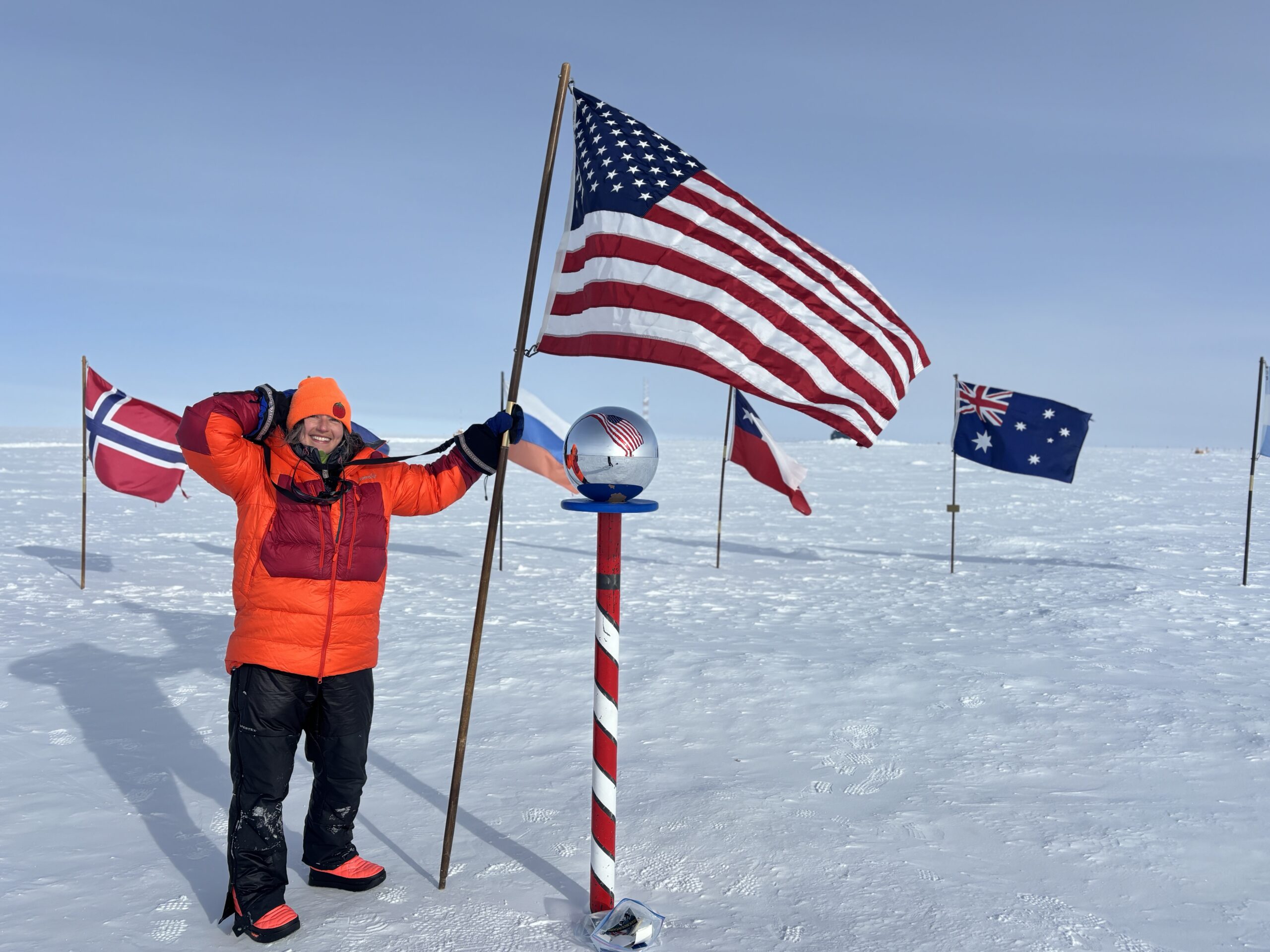
People often ask me: “How do you train for the South Pole?” The honest answer? You train for everything, because the South Pole is not just any expedition.
It is one of the most demanding solo endurance challenges on earth. Physically. Psychologically. Emotionally. Logistically.
At E3Coach I’ve coached multiple successful solo unsupported South Pole expeditions and pairs with a 100% success rate, including:
- the first woman of colour to complete it, Preet Chandi
- the first American female, Monet Izabeth
- successful solo expeditions from Amelia Rudd (Wendy Searle) and Cat Burford
- Antarctic Fire Angels Bex and George
And one thing has become very clear: The secret is never one big session. It is the accumulation of thousands of small things done well, repeated over and over. That’s what gets people to the Pole.
It Takes Longer Than People Think
Most people underestimate how long proper South Pole preparation takes. For a solo unsupported expedition, I’d say: 12 months minimum. 2 years is often better. Why?Because we’re not simply building fitness. We’re building:
- aerobic capacity
- strength
- muscular endurance
- cold adaptation
- resilience
- expedition systems
- self-management
- mental robustness
This isn’t just about being fit enough to pull a pulk. It’s about being prepared enough to live alone inside discomfort for 40–60 days.
The Aerobic Engine Is Everything
South Pole travel is brutally aerobic.
Most days look like:
- 10–12 hours skiing
- 70-minute blocks (varies on personal plan on arrival at pole time)
- heavy pulk (100+ KG, start weight)
- repeated day after day
- little recovery
This means your aerobic base must be huge.
At E3Coach we build this first.
Session Example:
5-hour tyre drag (Zone 2)
- Flat or rolling terrain
- Controlled heart rate
- Fuel every 45 mins
- Minimal stops
This teaches:
- movement economy
- fat oxidation
- fueling habits
- boredom tolerance
Amelia (Wendy) wrote after her crossing:
“Hauling my 4×4 tyre was the bread and butter of the training programme.”
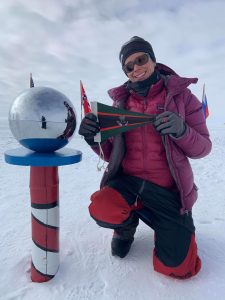
(Amelia Rudd [Wendy Searle] at the end of her South Pole Solo unsupported) Follow Amelia here – https://www.instagram.com/betweensnowandsky/
That’s because specificity matters, tyres teach pulk mechanics not perfectly, but close enough.
Muscular Strength
The stronger you are, the lower the cost of every movement, that matters massively when every ski stride is repeated 500,000+ times.
We build strength early.
E3Coach South Pole Strength Session
A) Heavy Trap Bar Deadlift
5 x 5
B) Split Squat
4 x 8 each leg
C) Bent-over Row
4 x 10
D) Sled Drag
6 x 30m heavy
E) Core Carry
5 x 50m
This creates:
- posterior chain durability
- trunk stiffness
- pulling power
- load tolerance
Preet’s success was built on this foundation. Her ability to maintain 15-hour days in Antarctica came from years of quietly building robustness before speed.
Muscular Endurance: The Real South Pole Currency
This is often where people fail, not because they’re unfit because their muscles can’t sustain force, South Pole skiing is repetitive, relentless, the same movement, all day, every day.
Session Example:
Big Step-Up Session
2 hours continuous
20kg pack
No music.
No distractions.
Just repetition.
Session Example:
Hill Repeats
10 x 15 mins uphill
Heavy pack
Walk down recovery
The goal:
legs fail before lungs.
That’s the point.
Wendy trained for 5–6 hour tyre drags and said she became “stronger by stealth.” That phrase says everything. The gains are rarely dramatic, they accumulate.
Mental Strength Is Built Inside The Physical Training
This is probably the biggest thing, people think mental toughness is separate, I don’t. At E3Coach, we train the mind inside the body, because that’s how the Pole tests you, not in isolation, together.
Examples:
- start sessions in darkness
- train in storms
- train when tired
- tie knots with frozen hands
- camp after long sessions
- navigate under fatigue
- practise stove drills repeatedly
- practise tent setup repeatedly
Cat Burford spoke about this beautifully after her expedition:
‘The physical work was hard, but the constant repetition of camp systems, routines and discomfort management made the real difference.’
That’s huge, the small things become survival.
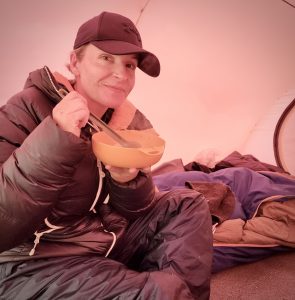
(Pictured above Cat Burford in her happy place, follow Cat here) – https://www.instagram.com/themolarexplorer/
Practise Every System
This is something people miss,South Pole success isn’t just skiing. It’s:
- packing
- unpacking
- eating
- melting snow
- repairing kit
- drying gear
- managing blisters
- staying warm
- decision making
And you must practise all of it. Repeatedly. James used the phrase “the endless white” in Greenland. The South Pole is the same.
White.
Wind.
Pull.
Eat.
Sleep.
Repeat.
That monotony is psychologically heavy, so we rehearse monotony. On purpose.
Recovery Matters More Than Ever
Training for the Pole is huge, without recovery you break, at E3Coach recovery includes:
Recovery Protocol
- 9 hours sleep target
- post-session carbs within 30 mins
- protein immediately
- hot/cold exposure
- mobility
- breath work
- walking
Because adaptation happens here.Not in the session.
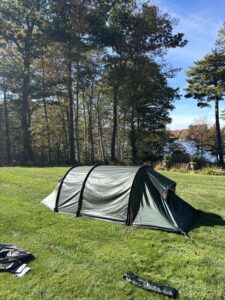
(Monet’s Tent set up practise in local field, this routines repeated over and over can really help the success of an expedition.) Follow Monet here – https://www.instagram.com/monet.izabeth/
The Secret To Success
People always want a secret. There isn’t one. It’s consistency, that’s it, not perfect sessions, not motivational quotes, not hero workouts. Consistency, small things, done repeatedly over time.
That’s how Wendy got there.
That’s how Preet got there.
Thats how the Fire Angels got there
That’s how Cat got there.
That’s how Monet got there.
And that’s how every successful solo South Pole athlete I’ve coached got there. The Pole doesn’t care about talent, it cares about preparation, and preparation is built long before the first ski stride. Usually in dark mornings, with wet tyres, heavy packs, tired legs and quiet sessions nobody ever sees.
That’s where the South Pole is won.
Check out Youtube insights to Solo South Pole Training – https://youtu.be/DD_YcRoTHjw?si=zZtRSL1uGkG5_Mbu
Follow E3coach community here – https://www.instagram.com/e3coach/
Follow Head coach here – https://www.instagram.com/jon_endurance_coach/