Why can one athlete move strongly uphill for hours with a heavy pack while another falls apart halfway up a climb despite having “good fitness”?
Most of the time, the answer is muscular endurance.
Not VO2 max.
Not motivation.
Not mental toughness.
Muscular endurance is the ability of your muscles to repeatedly produce force for long periods of time without failing. In mountain sports, it is one of the biggest performance separators there is.
At E3Coach we see this constantly:
Athletes with decent aerobic fitness whose legs completely fall apart on steep climbs, long carries or sustained vertical gain.
Their heart and lungs are often not the limiter.
Their muscles are.
Mountains Expose Weak Muscular Endurance
Steep terrain changes everything.
On flat ground, many athletes can hide weaknesses because the muscular demand is lower and movement is more economical. But once you start climbing steeply with weight on your back, especially at altitude or over long durations, muscular endurance becomes brutally important.
This is why some athletes can ascend thousands of metres continuously while others need constant stops despite breathing reasonably comfortably.
The limiting factor becomes the muscles’ ability to:
- Use oxygen efficiently
- Resist fatigue
- Continue producing force repeatedly
- Clear metabolic byproducts effectively
In simple terms:
Your engine might be strong enough…
…but your legs cannot sustain the work.
Why Muscular Endurance Matters So Much
Mountain movement is repetitive force production.
Every uphill step is essentially a small strength movement repeated thousands upon thousands of times.
The steeper the terrain and the heavier the load, the greater the demand becomes.
This is why mountain athletes cannot rely purely on “cardio fitness.”
You need:
- Aerobic fitness
- Strength
- Movement economy
- Muscular endurance
All working together.
The athletes who perform best in the mountains are usually not the athletes with the flashiest VO2 max scores.
They are the athletes who can keep producing force efficiently for hour after hour while staying aerobic.
The Aerobic System Still Comes First
This is important.
Muscular endurance training works incredibly well, but only if the aerobic base underneath it is strong enough.
Too many athletes jump straight into weighted hill sessions, hard carries and brutal interval work before building the aerobic system needed to support it.
Initially they improve quickly…
Then they plateau…
Then often break down or stagnate.
At E3Coach we constantly return to the same principle:
The aerobic base is the foundation.
Without it, muscular endurance gains are limited and short-lived.
A strong aerobic system allows:
- Better oxygen delivery
- Better recovery
- Greater mitochondrial density
- Better lactate clearance
- Greater durability under load
The bigger the aerobic base, the more muscular endurance work your body can actually absorb and benefit from.
How We Build Muscular Endurance
One of the most effective methods is simple:
Steep uphill movement under load.
This could mean:
- Weighted uphill hiking
- Long step-up sessions
- Stair climbing
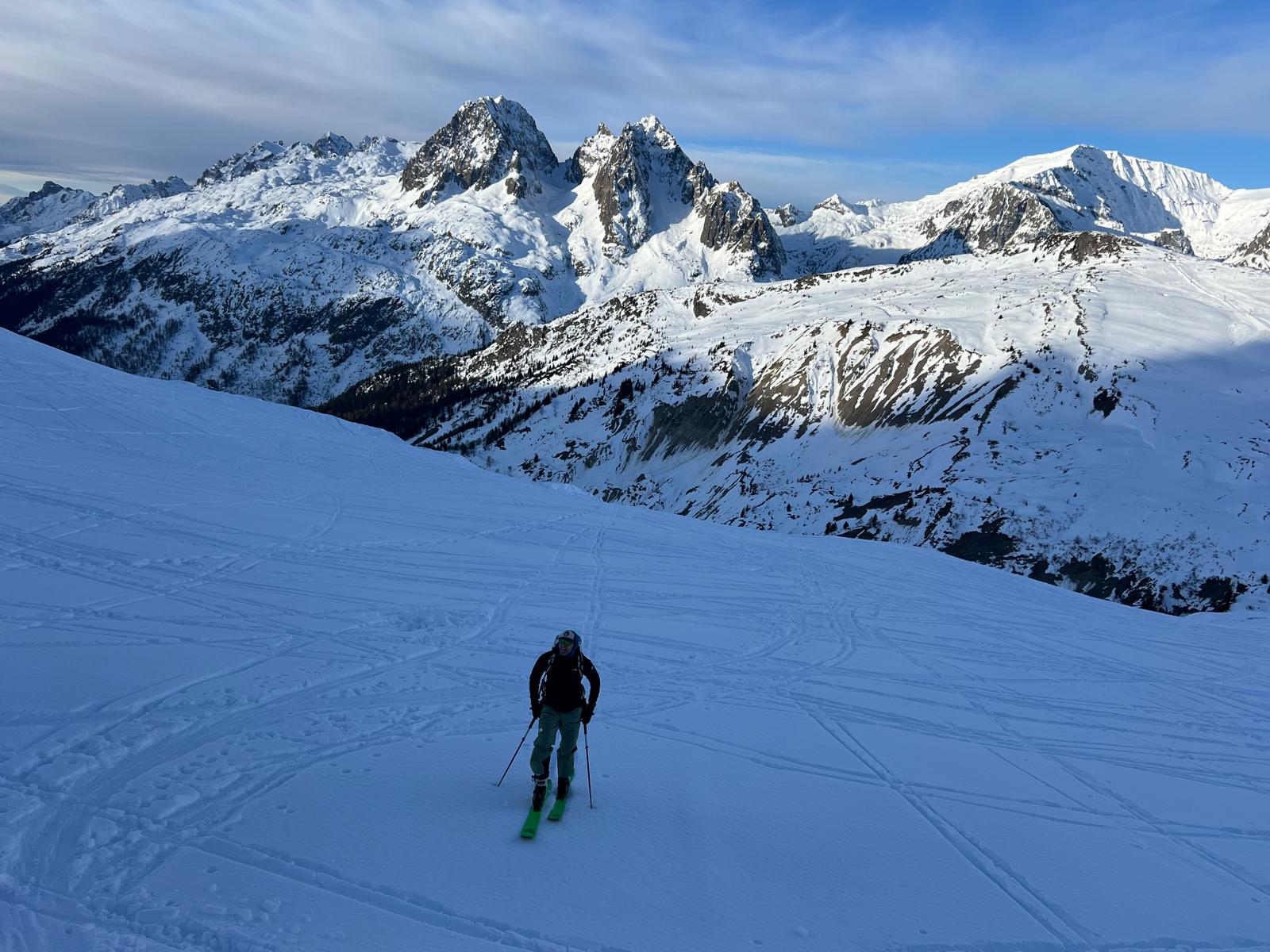
- Ski touring ascents
- Sustained steep treadmill work
- Mountain carries
The goal is not to turn the session into a breathless cardio smash-fest.
The goal is for the muscular system to become the primary limiter.
You should often feel:
- Legs burning
- Deep muscular fatigue
- Heavy local effort
…while still remaining relatively controlled from a breathing perspective.
That is the sweet spot.
In mountain sports, your legs often fail long before your lungs do.
So we train the legs specifically for that reality.
Why Steep Terrain Matters
Specificity matters massively.
Flat running alone does not prepare you for long steep climbs carrying equipment through mountains.
The muscle recruitment patterns are completely different.
Steep terrain recruits:
- Glutes
- Calves
- Posterior chain
- Hip stabilisers
- Deep local muscular endurance
Far more aggressively than flatter movement.
This is why mountain athletes should train like mountain athletes.
Not just runners who occasionally go uphill.
Progression Matters
Muscular endurance training is extremely taxing.
More is not always better.
A good ME block is progressive and controlled:
- One session per week
- Gradually increasing load OR vertical
- Maintaining aerobic volume alongside it
- Respecting recovery properly
One of the biggest mistakes athletes make is replacing aerobic volume with excessive intensity and muscular endurance work.
This destroys the very aerobic system that allows muscular endurance to improve in the first place.
Again:
The aerobic base supports everything.
Real Mountain Fitness
Real mountain fitness is not about looking fit for 20 minutes.
It is about:
- Producing force repeatedly for hours
- Staying efficient under fatigue
- Maintaining movement quality
- Recovering while still moving
- Handling load and terrain without falling apart
That is muscular endurance.
And for mountain athletes, it is one of the most important physical qualities you can develop.
Follow E3C community athletes – https://www.instagram.com/e3coach/
Follow Head Coach Jon Fearne – https://www.instagram.com/jon_endurance_coach/
For Tips and Advice check out – https://www.youtube.com/@E3coach